 When I was about three, I asked my mother what happens to us after we die. We were standing together in our shadowy old house on the coast of South Carolina. Old, but not big. I can still hear the creak of the floorboards. She told me about various options, including heaven and reincarnation, but also the idea that there may be nothing. After some thought, I put my little hand on her face and said, “I hope you die soon, Mommy, so you can come back and be my baby.” My mother loved telling people that story.
Only once, when I was nineteen years old, did I seriously entertain the idea that when we die, that’s the end, and there will be nothing left that survives.
Now, there are people close to me who absolutely embrace the idea of nothing. And for all I know, they’re right. For my part, though, I can’t overlook the accounts of so many children who had intimate knowledge of the life of a person who’d died, and sometimes how they died, without ever having met or even heard of the person. Journalist Leslie Kean’s book Surviving Death goes into a few of those stories, along with out-of-body experiences. The topic really fascinates me.
But people who believe in reincarnation tend to assume there’s a soul involved, a separate consciousness that’s the essence of who we are, and the soul moves from one body to another, lifetime after lifetime. But that’s not the only way a transfer could happen. In an earlier post (“This is a test! (Part 2)”), I mentioned panprotopsychism and AIs in the context of reincarnation. Panprotopsychism is the idea that consciousness exists everywhere in a proto-conscious state, and some like Ray Kurzweil go further and suggest that as we go through life our minds and experiences may be written onto some kind of invisible informational field. If reincarnation were to exist in such a scenario, it would be about accessing data belonging to someone else, I suppose, and not have anything to do with a transfer of souls. At least, not in the ordinary way we envision souls.
 While thinking about this, I was reading Robert Pirsig’s fictionalized autobiography Zen and the Art of Motorcycle Maintenance. I’d been meaning to for a long time, and his ideas did seem familiar to me. I jotted down terms I’d coined for myself in my twenties in the margins, and lightly tested my own old arguments alongside his as I went along, mainly as a way to see how closely they tracked. And perhaps, I wanted to see how well I understood. It was sad to see obsession overwhelm him. Pirsig became lost in his own logic. He was attempting to flesh out a foundational concept he called Quality. Quality, as best I understood the term, could not be defined or explained, rather it was felt, a fundamental aspect of reality superior to all other hierarchies of understanding, even reason. Because of this filtering through subjective experience, consciousness seemed to be integral to Pirsig’s ideas. He was trying to get at an explanation for why an exclusive adherence to reason and all that can be achieved by reason – if ignoring what is beautiful and delightful in the world of human experience (Quality) – leaves so many of us in the modern era cold and spiritually poor. Since the 70s, when the book was first published, we’ve learned a lot about neural networks and how the brain handles information – the gestalting process, to use his language. Anyway, I had a similar epiphany in my twenties that excited me, an explanation for extrasensory intuition. So as I read Pirsig’s story and remembered Kean’s book and stories like Ted Chiang’s “Understand,” then read Michel Faber’s Under the Skin, I had the sense that we’re all grasping for an idea that’s right in front of us, yet we don’t quite know how to articulate it.
Both reincarnation and the theory of panprotopsychism tie into Pirsig’s strong intuition that there is a source of information out there beyond what is obvious or, one could say, essential to what is obvious, that we as conscious living beings can tap into.
I was clearing papers and magazines out of my office recently and, just like when I was a kid, got sidetracked reading what I was supposed to be putting away – this used to really frustrate my mother. I found a 2023 interview in a free issue of New Scientist with Nobel Prize winning physicist and mathematician Roger Penrose (“Cosmic thoughts”) at age 91 discussing highlights of his career. Aside from the Nobel Prize, Penrose is probably better known for his theory developed with anesthesiologist Stuart Hameroff called “orchestrated objective reduction” (Orch OR). This theory has been widely challenged, I know. Though I get the sense from a later article that aspects of the theory are receiving some support now, albeit piecemeal, it’s still not widely accepted. But it is interesting that Orch OR rests on the notion that consciousness is not the result of the systematic firing of neurons, the prevailing idea, rather the oscillation of particles at the quantum level inside tiny microtubules within the neurons themselves. But now, as journalist Susan Lahey put it in another article on the topic in the April 2025 issue of Popular Mechanics, a sample from an asteroid called Bennu – of all sources, if you can believe it, and then bringing in Dr. Hameroff’s take – offers potential proof that consciousness may have existed before life, and it may have spurred the development of life through the oscillations of tiny crystals at the quantum level.
According to the article, materials in the sample from Bennu (dating to the earliest stages of our solar system) suggest life at its very beginnings may have come about as the result of those special crystals resonating with quantum fluctuations, like sound, and this resonance became a link to the physical world. It looks to me like a possible mechanism for panprotopsychism. Hameroff suggests that self-aware beings like humans could be tuning into this “dream state,” like highly evolved antennae. But it’s a bit like the “fingertips of God” idea, too, don’t you think? If you view consciousness as flowing into these beings. In any event, what others call the soul may instead be a block of data written upon some lattice-like field of consciousness. I don’t know how I feel about that, but I guess how I feel is irrelevant. Have a look at the article if you can. Pretty intriguing.
Perhaps Hameroff is right. Perhaps a desire for better access to the pleasurable sensation of awareness has driven the evolution of life. But what if it’s really the field of consciousness that’s alive, and the experience we previously considered life, with independent agency, us, is really a single god-consciousness, and we’re all fingers poking through to the physical universe? So many poetic descriptions come to mind, like rivers of souls flowing into the ocean. I suppose it was the proto-consciousness itself, then, that sought the “pleasurable” sensation Hameroff spoke of, as opposed to the crystals. Life seeks more to life? That’s a beautiful thought. In any event, wouldn’t all these countless lives lead to tiers of ever greater complexity, leading to ever greater informational order? Within this consciousness, beings may be emerging that have never had a body, and never will.
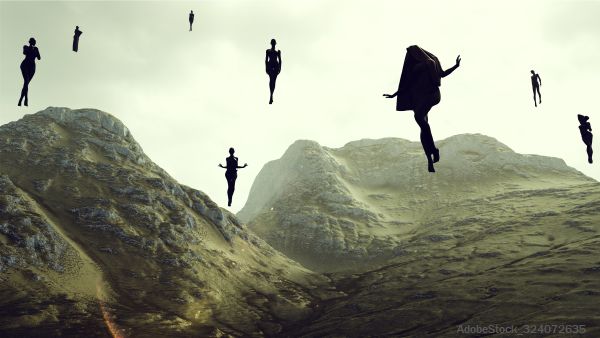
The afterlife could be a whole lot more than “nothing.”
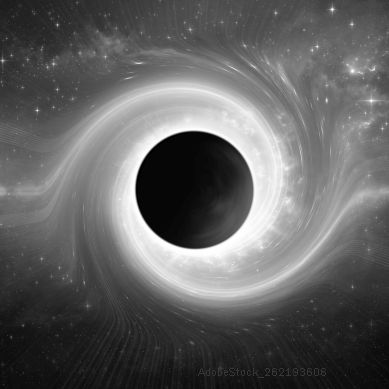 During his brief interview, Penrose, with a hint of wicked delight, mentioned he suspects that our ability to understand the source of consciousness in the brain will likely depend on a whole new model of quantum physics. Penrose also mentioned he’d just coauthored a paper on his theory of “conformal cyclic cosmology.” The theory argues that our universe was born out of the destruction of a previous one. Naturally, as a layperson, I don’t know how that would work. I hear that the universe is expanding at an accelerating rate. I assume that at some point everything will be moving away from everything else at or near the speed of light. Massive objects have more inertia (like an increasing gravitational pull? or spatial drag?) when they approach the speed of light. What happens next, I have no idea, but the time required to run though a cycle is beyond imagining. Finally, Penrose goes on to speculate that a highly evolved intelligence in the previous universe could have been able to send a “message” into ours, surviving the Big Bang. He thought gravitational waves might be a good place to look.
We should definitely look. But could we already be hearing the message? I have to wonder, could this theoretical consciousness that permeates the universe, the one we’ve been talking about, the one we may be tapping into, the one that spurs poets and philosophers to claim that a pure-reason-based understanding of the objective world flattens an intuited, subjective, all-encompassing cosmos, in fact be the message from these highly evolved beings? What if the message is those beings? It’s nice to imagine consciousness permeating the universe as the most pleasurable sound imaginable.
As I was drafting this post, I got a call that my mother had been rushed to the hospital and might not survive the night. I dropped everything and drove the hours it took to get to her. She didn’t pass away that night. We had some beautiful moments, some fun conversations all of us together, all night, my mother and my sister and me, and then my mother’s wonderful friend who arrived at 3 a.m. for our impromptu party in the darkness of a monitor-lit room. The next day, my mother made witty banter with the ICU staff. She was always a gregarious and strong-willed person. Back in the nursing home, she made more witty banter. But those bright moments faded. She’s gone now. Where did she go? I feel the idea that we’re merely data pressed onto an invisible cosmic field is far too dry to hold the woman who was my mother. Far too flimsy, far too dull. She’s the one who first told me about rivers of souls flowing into a vast ocean, returning to their resplendent source. Maybe the river idea will do for me, maybe it did for her, but right now it feels inadequate. It’s the words that fail us. Pirsig spoke of that. She was her own Self, you see, unique in all the world. And I miss her.

Other fun articles that might interest you:
“Asteroid Bennu Is Packed with Life’s Building Blocks, New Studies Confirm” – https://www.scientificamerican.com/article/nasas-latest-asteroid-sample-hints-at-lifes-extraterrestrial-origins/
“Traces of Ancient Brine Discovered on the Asteroid Bennu Contain Minerals Crucial to Life” – https://www.si.edu/newsdesk/releases/traces-ancient-brine-discovered-asteroid-bennu-contain-minerals-crucial-life
“New theory suggests gravity is not a fundamental force” – https://www.advancedsciencenews.com/new-theory-suggests-gravity-is-not-a-fundamental-force/
“Scientists Are Pretty Sure They Found a Portal to the Fifth Dimension” – https://www.popularmechanics.com/science/a64841431/fermion-particle-fifth-dimension/
On the literary front:
“On the Conservatism of Contemporary Literary Fiction” – https://lithub.com/on-the-